


Telus Health Virtual Care
Case study
Overview
At TELUS Health, clinicians frequently spent valuable consultation time collecting patient information that should have been provided beforehand. I led the design of a structured consultation preparation flow to reduce administrative workload and improve the consultation experience.
My contribution
Prototyping
Product design
Usability testing
The team
4 x clinicians
15 x engineers
1 x product manager
1 x product designer
1 x copywriter
Timeline
9 months
Platform
iOS
Android
Web
The challenge
Clinicians were frustrated that patients were joining consultations without providing information and documents needed to proceed.
Photo ID verification
Medical history
Allergies and medications
Preferred pharmacy
Instead of focusing on care, clinicians were forced to complete administrative work during consultations. resulting in loss of consultation time and schedule disruptions.
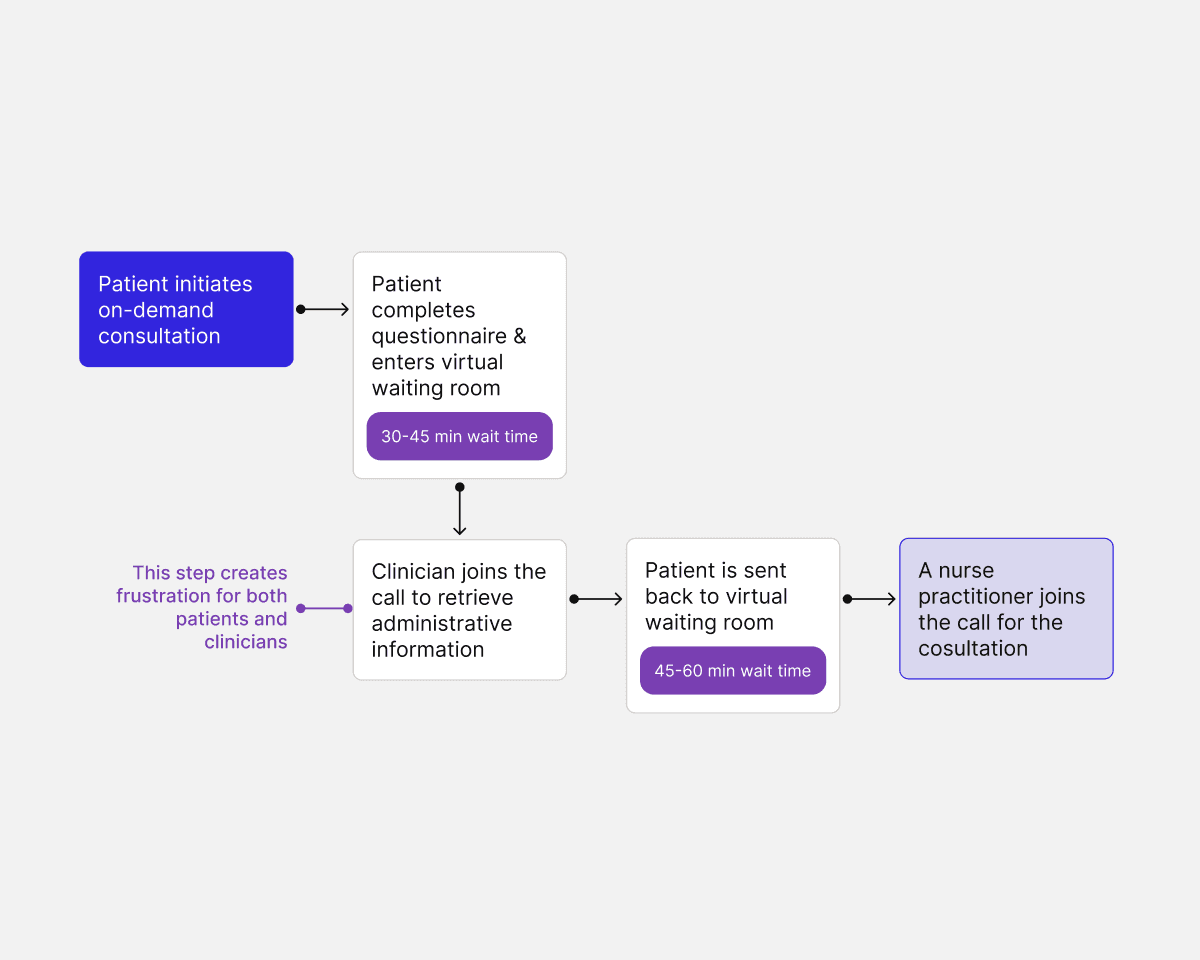
Key Insights
Patients in the virtual waiting room often:
Didn't know how long they would be waiting
Left the app whilst waiting
Missed clinician messages or calls
This resulted in missed consultations and scheduling disruptions for clinicians.
Constraints
Designing the solution required navigating several technical and regulatory constraints.
Ensure all patient data and flows comply with regulation & clinical requirements.
Create solutions that work with legacy backend limitation
Entire flow had to exist inside a modal interface - no page refreshes, redirects and limited ability to save progress
Designing the solution
To ensure patients arrived prepared for consultations, I designed a structured pre-consultation intake experience.
The goal was to guide patients through required preparation steps before entering the waiting room and reduce clinician workload.
Tasks were broken down into segmented screens.
Administrative user tasks were broken down into a 'gamified' list which encouraged users to complete.
Status indicators reduced uncertainty, provided clear feedback and encouraged completion of missing items.
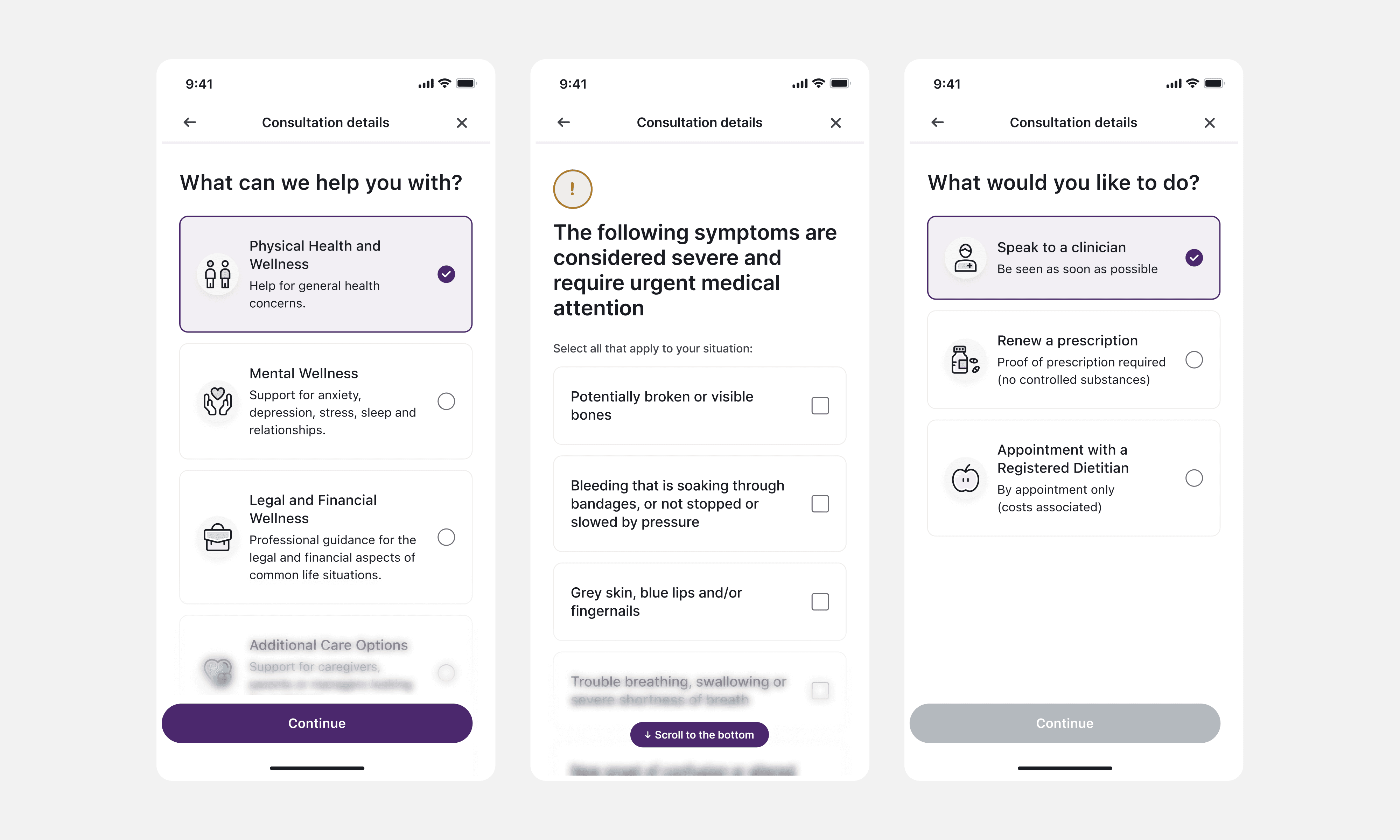
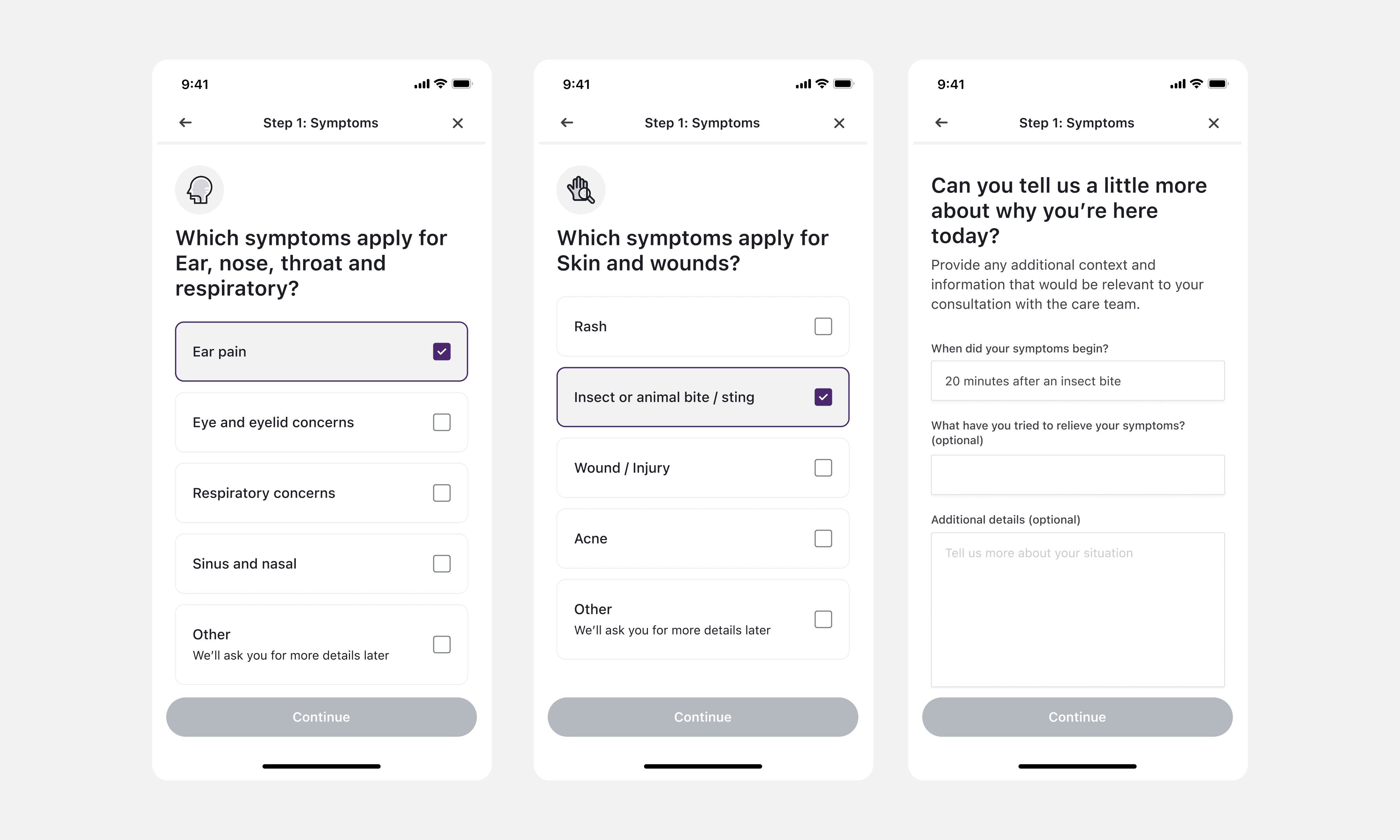
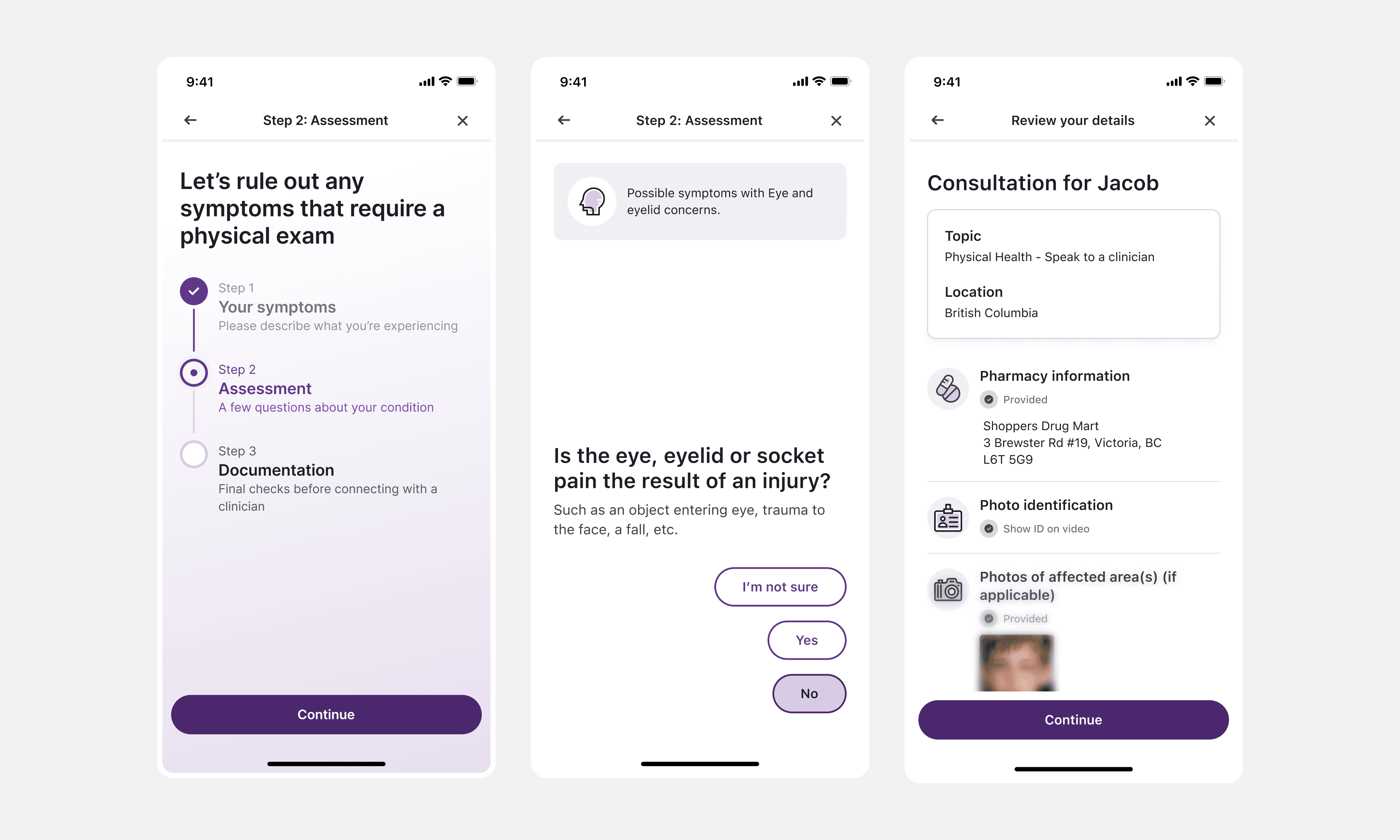
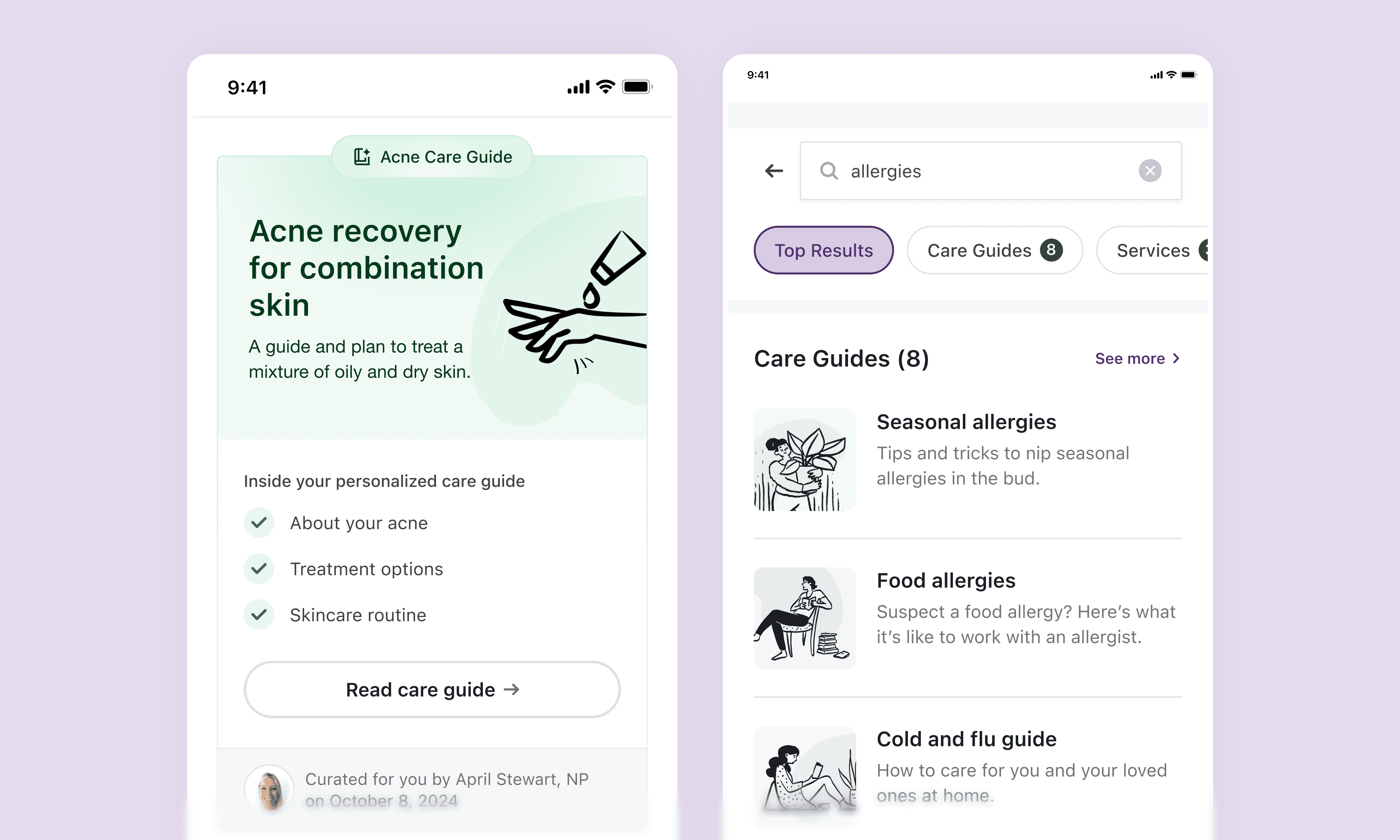
Innovation: AI-Assisted Care Plans
Beyond improving consultation preparation, I also explored a concept for AI-assisted care plans.
After a consultation, clinicians often need to create a care plan outlining next steps for the patient. This process can be time-consuming.
The proposed solution used AI to:
Generate an initial care plan based on consultation details
Allow clinicians to review, edit, and approve the plan
Deliver a clear, digestible aftercare plan to patients
Clinicians responded very positively to this concept, as it could significantly reduce post-consultation workload.
Impact
The redesigned consultation flow improved both patient preparation and clinician efficiency.
Key outcomes included:
Reduced administrative workload for clinicians
Higher rates of patient information completion before consultations
Improved consultation completion rates
Faster consultation turnaround
Shorter wait times for patients
Clinicians were particularly enthusiastic about the new flow, as it allowed them to spend more time providing care rather than collecting administrative details.
Next case study
Let’s work together.
Got something in product or web design? Let's start the conversation.
" height="32px" id="hrO0YMoaZ" width="32px"/><path d="M 3.6 16 L 0.2 16 L 0.2 5.3 L 3.6 5.3 Z M 1.9 3.8 C 0.8 3.8 0 3 0 1.9 C 0 0.8 0.9 0 1.9 0 C 3 0 3.8 0.8 3.8 1.9 C 3.8 3 3 3.8 1.9 3.8 Z M 16 16 L 12.6 16 L 12.6 10.2 C 12.6 8.5 11.9 8 10.9 8 C 9.9 8 8.9 8.8 8.9 10.3 L 8.9 16 L 5.5 16 L 5.5 5.3 L 8.7 5.3 L 8.7 6.8 C 9 6.1 10.2 5 11.9 5 C 13.8 5 15.8 6.1 15.8 9.4 L 15.8 16 Z" fill="rgb(255, 255, 255)" height="16.000000190734863px" id="Ocq6OAmI9" transform="translate(8 8)" width="16px"/></svg>)
" height="32px" id="TayvhfDp_" width="32px"/><path d="M 8 0 C 3.584 0 0 3.584 0 8 C 0 12.416 3.584 16 8 16 C 12.4 16 16 12.416 16 8 C 16 3.584 12.4 0 8 0 Z M 13.28 3.68 C 14.24 4.848 14.8 6.32 14.832 7.936 C 14.608 7.888 12.352 7.44 10.08 7.712 C 10.032 7.6 9.984 7.472 9.936 7.36 C 9.792 7.024 9.648 6.688 9.488 6.368 C 11.984 5.36 13.136 3.872 13.28 3.68 Z M 8 1.184 C 9.728 1.184 11.328 1.84 12.528 2.896 C 12.4 3.072 11.376 4.448 8.944 5.36 C 7.824 3.296 6.576 1.616 6.4 1.36 C 6.912 1.248 7.44 1.184 8 1.184 Z M 5.088 1.824 C 5.264 2.064 6.48 3.76 7.616 5.776 C 4.416 6.624 1.6 6.608 1.296 6.608 C 1.76 4.48 3.184 2.72 5.088 1.824 Z M 1.168 8.016 C 1.168 7.952 1.168 7.872 1.168 7.808 C 1.456 7.824 4.784 7.856 8.192 6.832 C 8.384 7.216 8.576 7.6 8.752 8 C 8.672 8.032 8.576 8.048 8.48 8.08 C 4.96 9.216 3.088 12.32 2.928 12.576 C 1.824 11.36 1.168 9.76 1.168 8.016 Z M 8 14.832 C 6.416 14.832 4.96 14.288 3.808 13.392 C 3.936 13.136 5.312 10.464 9.168 9.12 C 9.184 9.104 9.2 9.104 9.216 9.104 C 10.176 11.6 10.576 13.68 10.672 14.288 C 9.856 14.64 8.944 14.832 8 14.832 Z M 11.808 13.664 C 11.744 13.248 11.376 11.248 10.48 8.8 C 12.624 8.464 14.496 9.024 14.736 9.088 C 14.432 10.992 13.344 12.64 11.808 13.664 Z" fill="rgb(255, 255, 255)" height="16px" id="YbRaKpxIJ" transform="translate(8 8)" width="16px"/></svg>)
" height="32px" id="JVzKgZkM5" width="32px"/><path d="M 0 2.667 C 0 1.194 1.194 0 2.667 0 C 4.139 0 5.333 1.194 5.333 2.667 C 5.333 4.139 4.139 5.333 2.667 5.333 C 1.194 5.333 0 4.139 0 2.667 Z" fill="rgb(26, 188, 254)" height="5.333399999999999px" id="ydcjNquk_" transform="translate(15.983 13.333)" width="5.333300000000001px"/><path d="M 0 2.667 C 0 1.194 1.194 0 2.667 0 L 5.333 0 L 5.333 2.667 C 5.333 4.139 4.139 5.333 2.667 5.333 C 1.194 5.333 0 4.139 0 2.667 Z" fill="rgb(10, 207, 131)" height="5.333300000000001px" id="NPUpvGMxn" transform="translate(10.65 18.667)" width="5.333399999999999px"/><path d="M 0 0 L 0 5.333 L 2.667 5.333 C 4.139 5.333 5.333 4.139 5.333 2.667 C 5.333 1.194 4.139 0 2.667 0 Z" fill="rgb(255, 114, 98)" height="5.3332999999999995px" id="jGljsiE4Z" transform="translate(15.983 8)" width="5.333300000000001px"/><path d="M 0 2.667 C 0 4.139 1.194 5.333 2.667 5.333 L 5.333 5.333 L 5.333 0 L 2.667 0 C 1.194 0 0 1.194 0 2.667 Z" fill="rgb(242, 78, 30)" height="5.3332999999999995px" id="JUFtWyYKp" transform="translate(10.65 8)" width="5.333399999999999px"/><path d="M 0 2.667 C 0 4.139 1.194 5.333 2.667 5.333 L 5.333 5.333 L 5.333 0 L 2.667 0 C 1.194 0 0 1.194 0 2.667 Z" fill="rgb(162, 89, 255)" height="5.333399999999999px" id="StHT4lRlg" transform="translate(10.65 13.333)" width="5.333399999999999px"/></svg>)
©
Selected works / Raz